
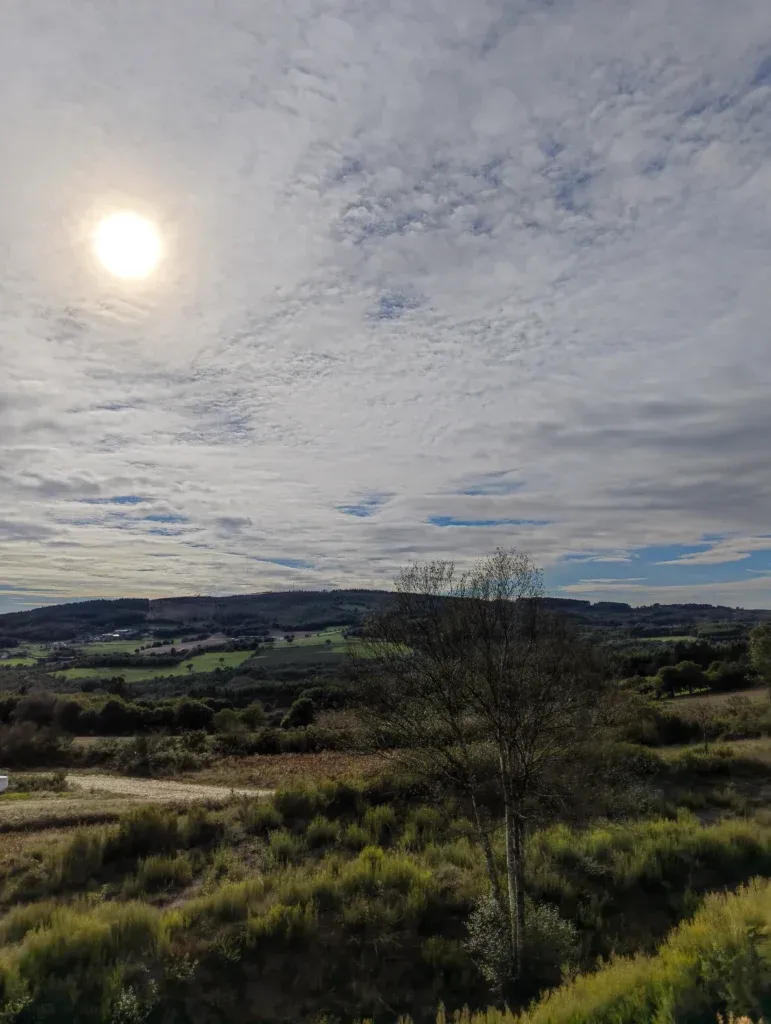
Just outside Portomarín, where pilgrims follow the Camino Francés through the countryside of Lugo, there is a place that is easy to pass without realising what lies beside the path. On a gentle rise near the village of Castromaior, the stone outlines of an Iron Age settlement are still visible. Unlike many of Galicia’s ancient hill forts, this one lets you walk through a surprisingly clear arrangement of streets, houses and defensive walls.
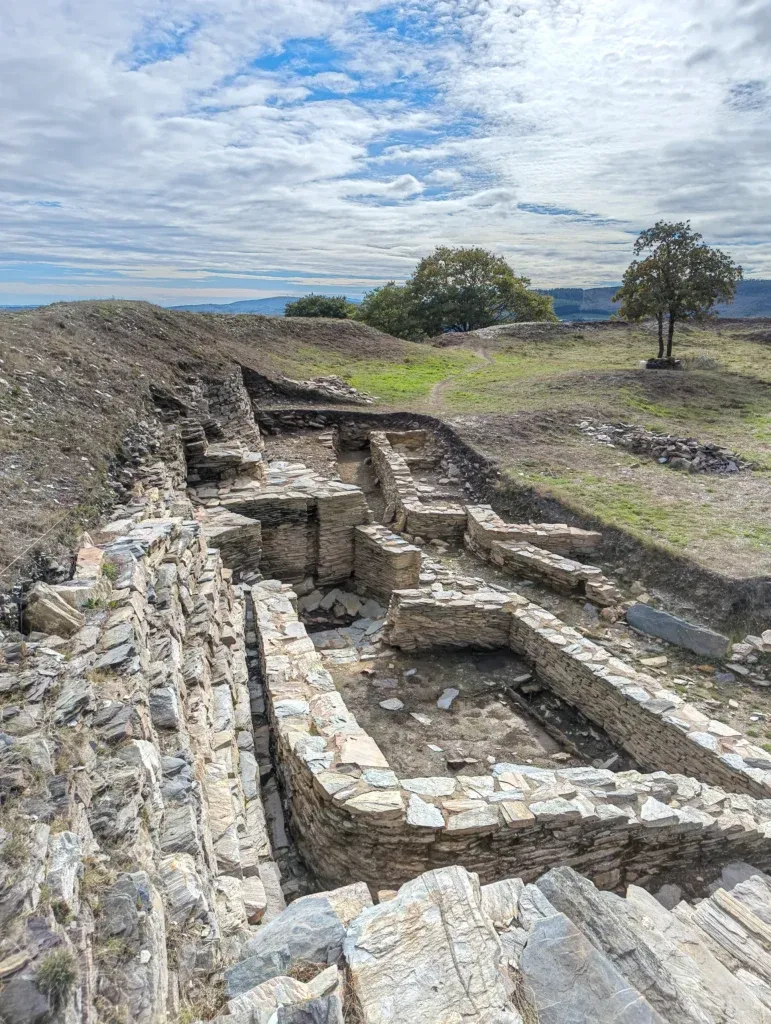
At first, the setting seems almost too peaceful for a fortified village. There are no dramatic cliffs or inaccessible slopes. Instead, Castromaior’s inhabitants relied on an elaborate system of walls, ditches and earthworks to protect their settlement. As you approach the entrance, it becomes easier to imagine why the way in was designed so carefully.
Walking through an ancient village
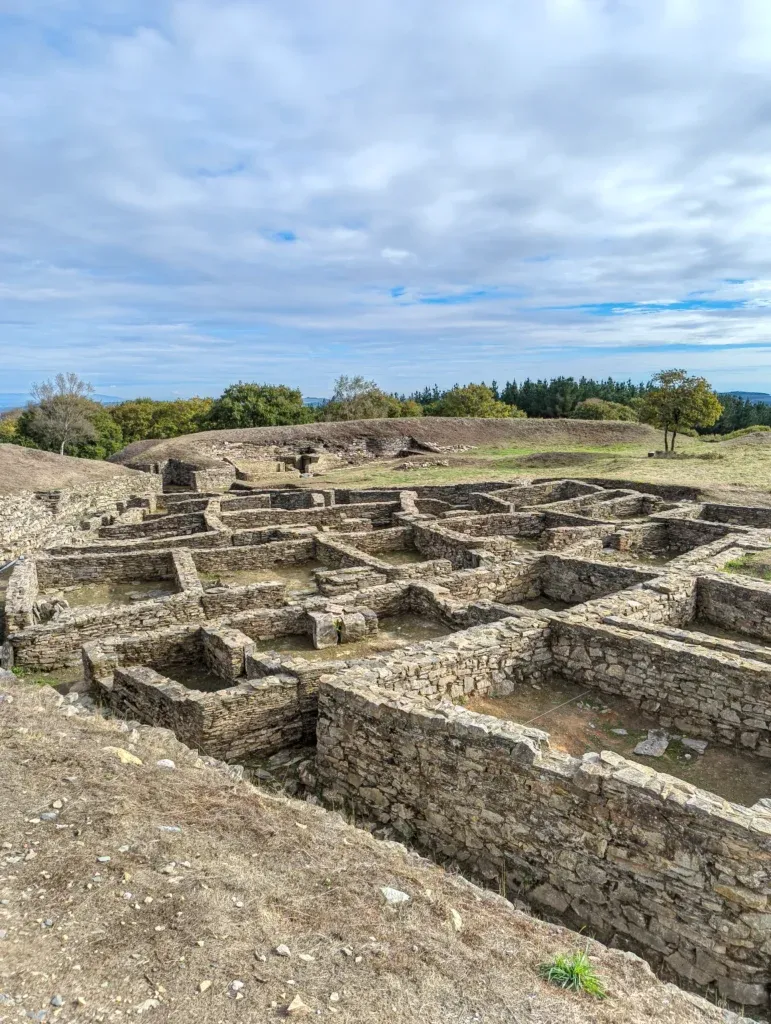
What makes Castromaior memorable is the feeling of walking through a real neighbourhood rather than looking at isolated ruins. Excavated stone foundations reveal the outlines of homes, passages and shared spaces. Archaeologists have also identified hearths and paved areas, small reminders that people cooked, worked and lived here long before the modern Camino passed nearby.
The settlement was occupied from approximately the fourth century BC until the first century AD. Its remains were later excavated and consolidated, making the site more legible to visitors while preserving its archaeological character. It was designated a protected cultural heritage site in 2010.
A quiet stop near Portomarín
Part of the pleasure of Castromaior is its location. The surrounding countryside opens towards the Miño valley, and the site feels far removed from the busier stops along the pilgrimage route. You do not need to be an archaeology expert to enjoy it. Taking your time among the low walls is enough to begin picturing the people who once called this hill home.
If you are travelling by car, Castromaior is a rewarding detour from Portomarín. If you are walking the Camino Francés, it is especially worth keeping an eye out for the site rather than passing straight through the village.
Planning your visit
Castro de Castromaior lies near Castromaior village in the municipality of Portomarín, Lugo province. The archaeological site is free to visit. Wear shoes with a good grip, especially after rain, because the ground is uneven and may be muddy. Bring drinking water; do not count on facilities at the ruins.
Allow time to explore the remains without rushing. Nearby, you can also visit the village church of Santa María de Castromaior and continue to Portomarín, where the historic church of San Nicolás was dismantled and rebuilt when the original town was flooded by the Belesar reservoir.
Castromaior is not a place of grand monuments or busy visitor attractions. Its appeal is simpler: an ancient Galician community, its streets and walls still traceable in the landscape, waiting quietly beside one of Europe’s best-known walking routes.