Physical Address
304 North Cardinal St.
Dorchester Center, MA 02124
Physical Address
304 North Cardinal St.
Dorchester Center, MA 02124

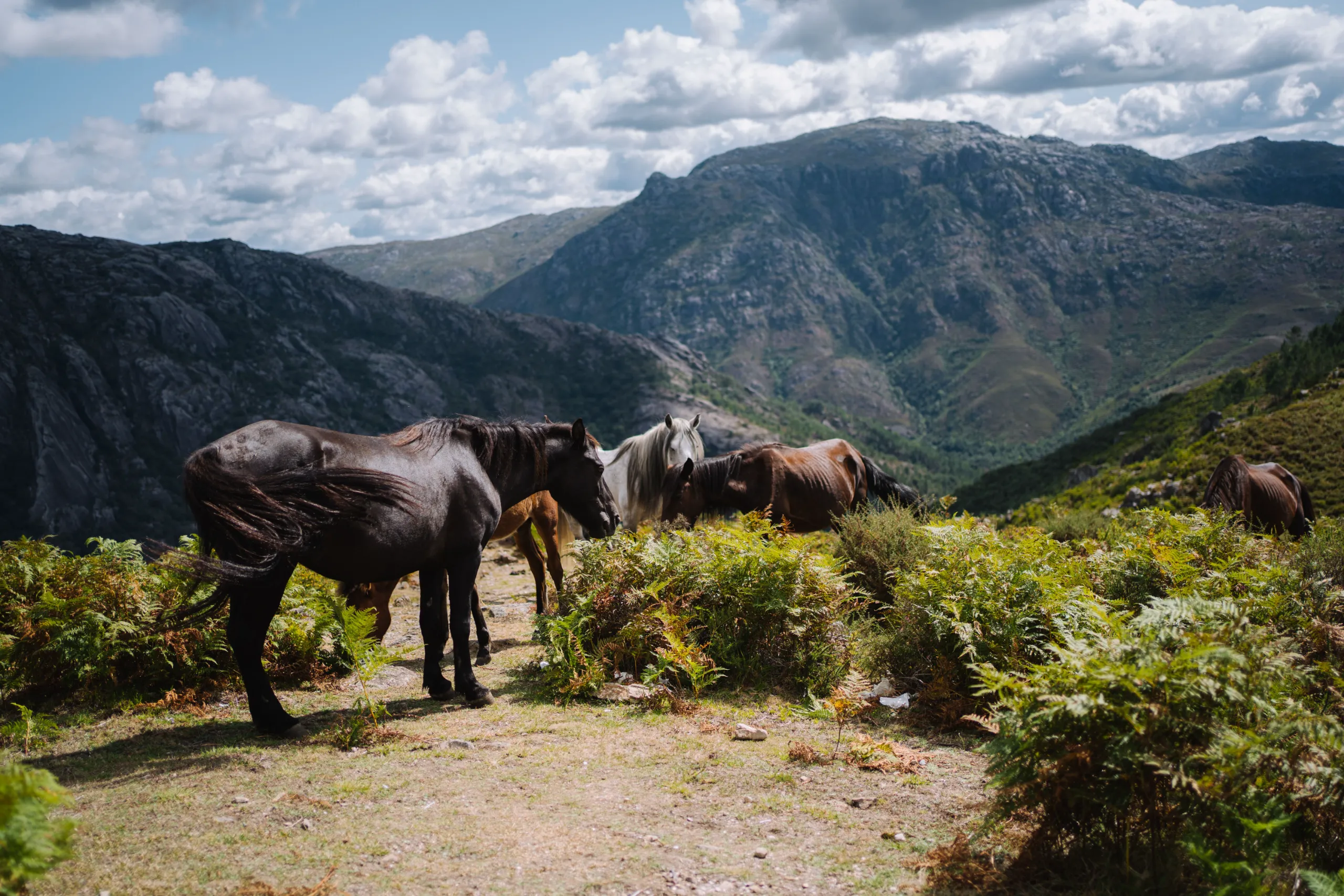
High in the hills above the village of Sabucedo, a low rumble builds before dawn. It isn’t thunder, it’s hooves. Hundreds of wild horses, driven down from the mountains by men and women on foot, are about to take part in a ritual that predates written record in Galicia. This is Rapa das Bestas, “the shearing of the beasts,” and it remains one of the rawest, most authentic cultural experiences left in Spain.
For travelers who want to see Galicia beyond its coastline and its cathedrals, Rapa das Bestas is essential viewing: loud, physical, occasionally chaotic, and utterly unlike anything staged for tourists.
Rapa das Bestas is an annual event in which semi-wild horses, native to the hills of Galicia and known locally as bestas, are rounded up from open pastureland and brought into a stone enclosure called a curro. There, without saddles, ropes tied to machinery, or modern restraints, local men and women known as aloitadores (“wrestlers”) grapple each horse by hand to trim its mane and tail and treat it for parasites, before releasing it back to the hills for another year.
It sounds simple. In practice, it’s a controlled storm of muscle, dust, and noise, with the aloitadores relying on generations of technique rather than force alone to bring a half-ton animal briefly under control.
The most famous Rapa takes place in Sabucedo, in the municipality of A Estrada (Pontevedra province), on the first weekend of July. It’s the oldest and largest of Galicia’s horse gatherings, dating back at least to the 16th century in written records, though local tradition claims roots reaching back to Celtic-era Galicia, long before Rome ever reached the peninsula.
Smaller versions of the same tradition take place elsewhere in Galicia through the summer, including in Mougás (Oia), Candaoso, and Morgadáns, each with its own community feel and far fewer visitors than Sabucedo.
Planning tip: Sabucedo draws large crowds. If you want the ritual without the crush of tourism, ask locally about the smaller village Rapas: they’re every bit as authentic.
It’s worth saying plainly: Rapa das Bestas is not a show. It’s a working tradition tied to how rural Galicia has managed its semi-wild horse herds for centuries, and for the villages involved, it carries deep communal meaning, a shared inheritance passed down through families of aloitadores.
Animal welfare has become a more visible part of the conversation in recent years, and it’s a fair question for any visitor to ask. Organizers in Sabucedo have taken steps to limit stress on the horses and regulate handling. If this matters to you, it’s worth reading current coverage before you go, and choosing to observe respectfully rather than push for a closer view than organizers allow.
<!– AFFILIATE CTA — VIATOR –>
Want to experience Galician traditions with a local guide? Browse guided cultural day tours around Santiago de Compostela and Ribeira Sacra that combine festivals, food, and folklore. 👉 [Book a Galicia cultural tour on Viator, VIATOR_AFFILIATE_LINK]
Rapa das Bestas is just one thread in a much bigger fabric of Galician tradition. If your trip doesn’t line up with early July, the region’s calendar is full of equally distinctive events:
Together, these traditions tell the story of a region shaped as much by its Celtic and pre-Roman past as by its Catholic present, something Galicia wears more openly than almost anywhere else in Spain. <!– AFFILIATE CTA — TRAVELPAYOUTS –>
Planning your trip to Galicia? Compare flights into Santiago de Compostela or Vigo, and check car rental options for reaching villages like Sabucedo that public transport doesn’t cover well. 👉 [Search flights and car rentals, TRAVELPAYOUTS_AFFILIATE_LINK]
When is Rapa das Bestas in Sabucedo? The first weekend of July each year, running Friday through Sunday, with the main curro events typically on Saturday and Sunday.
Is Rapa das Bestas free to attend? Yes, entry to watch is free, though parking near Sabucedo is limited and fills early.
How old is the tradition? Written references to horse gatherings in Galicia date back to at least the 1500s, though the practice is widely believed to be far older, linked to the region’s pre-Roman past.
Is it suitable for children? It’s a physical, sometimes intense event with loud crowds and large animals close by. Older children generally do fine; use judgment with very young kids given the noise and crush of people.
Can I see Rapa das Bestas outside Sabucedo? Yes, smaller Rapas take place in villages like Mougás, Candaoso, and Morgadáns through the summer months, generally with far fewer visitors.