Physical Address
304 North Cardinal St.
Dorchester Center, MA 02124
Physical Address
304 North Cardinal St.
Dorchester Center, MA 02124

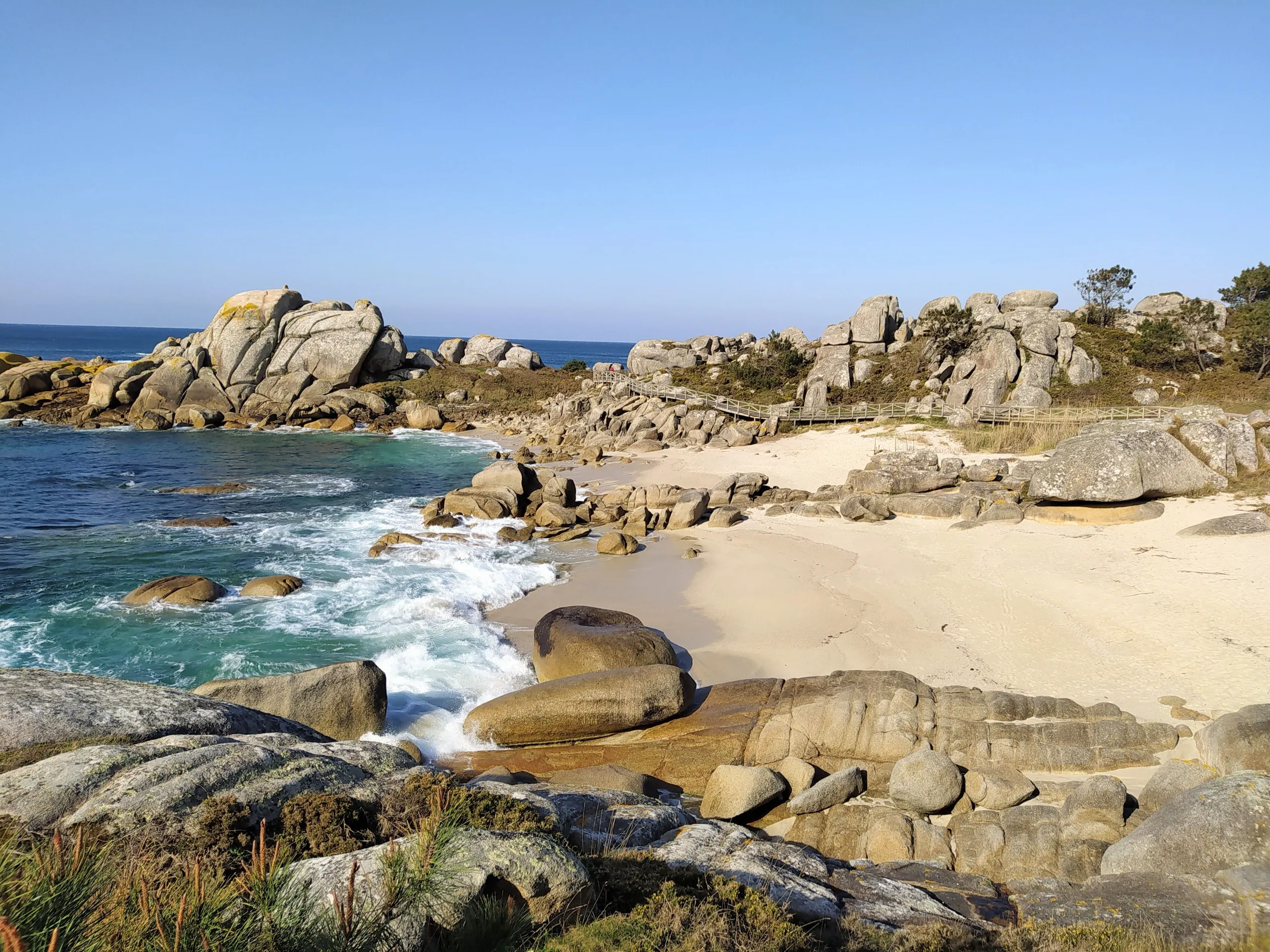
Costa da Morte, the Coast of Death, earns its name from centuries of shipwrecks along this exposed stretch of Atlantic coastline. It’s wilder and less visited than Rías Baixas, with fewer sheltered inlets and more raw cliffs, open ocean, and wind. That starkness is exactly what makes it beautiful. Here are the places along this coast that stand out most.
For centuries considered the end of the known world, and still the point where many Camino de Santiago pilgrims walk after reaching the cathedral, treating it as the true final stop. The lighthouse at the tip looks straight out over open Atlantic, and sunset here has a genuine sense of occasion, especially if you time it with fewer crowds outside July and August.
Less famous than Fisterra but arguably just as dramatic. This was the first lighthouse in Spain to run on electricity, and the cliffs around it are lined with wind turbines that somehow don’t detract from the wildness of the place. The coastal path here gives some of the rawest views on the whole Costa da Morte.
Technically just over the boundary into the Mariña Lucense rather than Costa da Morte proper, but close enough, and dramatic enough, that it belongs on any list of the region’s best coastal scenery. The rock arches are only fully visible at low tide, so a visit needs to be timed carefully, and access requires a free permit in the busier months.
A working fishing village with one of the most striking religious sites in Galicia, a small church perched right at the edge of the rocks, waves breaking around it during rough weather. The stones nearby are said to have healing properties in local legend, and the whole headland has a stark, almost otherworldly feel that’s hard to put into words.
Two of the wilder beaches on this coast, both large stretches of sand backed by dunes rather than development. They’re popular with surfers because of the consistent Atlantic swell, and even on a calm day the scale of the open ocean here is different from anything in the sheltered rías further south.
Camariñas is known across Galicia for its handmade bobbin lace, a tradition still practised by local women and visible in small workshops around the town. Beyond the craft itself, the town sits on a quiet inlet that offers a calmer contrast to the open cliffs further along the coast.
Costa da Morte is more spread out and less set up for tourism than Rías Baixas, which is part of its appeal but also means fewer services outside the main towns. Roads hug the coast in long, winding stretches, so distances take longer than expected, and we’d budget at least two full days to cover Fisterra, Vilán, and Muxía without rushing. Weather changes quickly here, and the coastline is exposed, so it’s worth checking conditions before any clifftop walks.